

- This event has passed.
MA/IN23: The minimal self / Ishtar’s Star

© Trillo/Poliks (HYDRA#2)
PROGRAM
OPENING ore 20:00
Roberto Alonso Trillo [ES] + Marek Poliks [US] /// Hydra #2
Sound Installation
ore 21:00
Manfredi Clemente [IT] ///Hajime yori kotoba shirazariki
Acousmatic – MA/IN Honorary Mention (Cat. A)
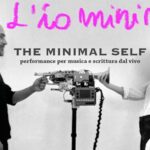
Giorgio Distante + Giulia Maria Falzea [IT] /// The minimal self
Live mixed media performance
ore 22:00
Christian Campobasso [IT] /// Ishtar’s Star
Live mixed media performance
Roberto Alonso Trillo [ES] + Marek Poliks [US] /// Hydra #2
Interactive Soft Robotic Sound Installation
480 latex, silicone, nylon, and poly nodes | Surveillance equipment, cloud connection |
Demiurge synthesis engine.
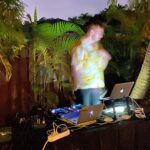
The conventional AI narrative assembles the alterity of the machine into a catastrophic vision of future-born cyborg supremacist, Terminator, all-knowing and all-seeing victor over smouldering corpses of human meat. hydra vulgaris is a small and benign freshwater creature with a complex reproductive apparatus. Like an AI, the hydra copulates boundlessly, its very substance both embryonic and gametic. It lives in a continuous state of renewal, fully regenerating itself every two weeks. Instead of avatar or adversary, let us delimit Artificial Intelligence itself to a process of hydralike reproduction; a sexual act across the complex physical/virtual plane. You are being recorded, and the object of this recording is already reproducing with its many antecedents. The screams or babbles of this hydra are the mewlings of your complex siblings (alongside many, many mutants). The tentacles of the hydra are lures, phalluses, weapons, eggs. Consider the tentacles of this soft robot as invitations to xenobestial indiscretion.
Roberto Alonso Trillo is a musician and researcher based in Hong Kong, where he works as an Assistant Professor at the Hong Kong Baptist University. His practice explores the connections between different artistic disciplines, from dance and music to video art and interactive sound installations. His recent work examines networked hybrid music practices endemic to a world increasingly mediated by AI and machine learning. His multipronged practice-based and -led research, operating at the intersection between philosophy, sociology, and cultural studies, spans areas as diverse as a post-structuralist reconsideration of musical workhood and authorship, technologically enhanced string pedagogy, gesture analysis, and interface development. Roberto is the author of Death and (Re)Birth of J. S. Bach (Routledge) and has published in journals such as Leonardo, Organised Sound, and Music Education Research. He is a co-founder, with his colleague Peter AC Nelson, of the MetaCreativity Lab at Hong Kong Baptist University. His long-time partnership with Marek Poliks – DisintegratorAI – has led to the publication of an upcoming book, several CDs, journal articles, and the exhibition of interactive artworks in international venues.
Marek Poliks is an artist, engineer, and theorist based in Minneapolis, Minnesota. He works with machine learning as applied to sound, digital media, robotics, and sculpture. Marek leads technology at the design firm Polytope, where he builds interactive infrastructure for clients like the Dubai Future Foundation. His long-time partnership with Roberto Alonso – DisintegratorAI – has led to CDs for NEOS and Creotz, articles for Leonardo and Organised Sound, a GAN-and Transformer-driven raw audio synthesis engine (‘Demiurge’), a real-time behaviour-responsive data interface (‘Archon’), two soft robots (‘Hydra’ and ‘Polyp’), and an upcoming book with Taylor & Francis. Marek has a PhD from Harvard, an ASCAP award in music journalism, and a career as an artist exhibiting around the globe.
MANFREDI CLEMENTE [IT] /// Hajime yori kotoba shirazariki
Michiko Ishimure's work is almost unknown in the western world. And yet her work, that of a poetess active in Japan since the 1950s, has been of great importance for her country and for the whole world, she being both the voice of the environmental movement which fought for recognition of Minamata's disease and a refined scholar, who also won a Ramon Magsaysay prize in 1973. The themes put at the center by Ishimure Michiko - her mithopoiesis revolving around the relationship with nature and the sensitive, the memory of individuals and communities, water as a vital element capable of assimilating the human and the divine in a forgetting permanence, the strong human gaze on human violence, the opportunity of healing – they are so strong that convinced me to put her at the center of a work of sound creation, in line with a personal research on the link between poetic text and electroacoustic sound that I have been following for a long time and that for the first time faces the challenge of dealing with a language that I can not speak.
Voice: Leonore Shiina
Language advisor: Junya Murakami
Manfredi Clemente has completed his PhD in Electroacoustic Composition (supervisor: Jonty Harrison) at the University of Birmingham in 2017 and his Master degree in Musicology and Performance Studies from the University of Palermo in 2020. He has taught at the University of Birmingham, at the Conservatoires of Pesaro and Teramo. At the moment he is Prof. of Electroacoustic Composition at the Conservatoire of Alessandria. He has a long experience with acousmonium and sound diffusion systems; he has been working as sound engineer for opera houses working aside names of the scene such as D. Gatti, M. Albrecht, R. Abbado, O.M. Wellber, D. Oren. He has been artist in residence for the Ass. Musiques&Recherches (Bruxelles), the Châteauvallon-Liberté - scéne nationale (Toulon), the Ass. APNÉES (Grenoble), the GMVL (Lyon). His music is played worldwide and has gained several recognitions, including the 1st Prize at Prix Presque Rien 2019, the GRM Banc d’Essai 2018 and the 1st Prize at DI_Stanze Festival 2014.
GIORGIO DISTANTE + GIULIA MARIA FALZEA [IT] /// The minimal self
“THE MINIMAL SELF. Electronic operetta for finding contentment in oneself" is live music and writing presented by the theater company NONSONODISTANTE, led by Giorgio Distante and Giulia Maria Falzea. The concept of the work is inspired by the study of "The minimal self," an essay by the American sociologist Christopher Lasch, that analyzes the culture of narcissism. The stage becomes a shared performative space, the audience sits on the stage while Distante plays an electroacoustic instrument he also had designed. Falzea invents and writes stories inspired by the spectators, which are projected onto a panel or another surface. Meanwhile, a laser and a cube from the future create drawings and abstract forms. A dramaturgy of the moment is created. The work, in its current state, is divided into ten short ever-changing chapters based on the suggestions that the audience provides to the artists. It's a play of mirrors where questions arise about who one wanted to be and who one has become, temporarily abandoning the pressure imposed by contemporary society – the anxiety of emotional performance and the disintegration of the individual. "The MINIMAL SELF. Electronic operetta for finding contentment in oneself" is a work that is composed each time in search of a non-definitive answer.
Giorgio Distante was born in 1980 in Cisternino, Puglia. At the age of five, he started playing the clarinet and piano, and at ten, he took up the trumpet. He graduated in trumpet in 1998 from the Monopoli Conservatory and began playing professionally in 1997. In 2000, he received a scholarship from the Berklee College of Music in Boston, Massachusetts, and lived in Boston from 2001 to 2004, attending courses in Improvisation, Arrangement and Composition. In 2009, he graduated with Honors in Electronic Music from the Perugia Conservatory under the guidance of Maestro Luigi Ceccarelli. He developed his own software to manipulate the trumpet sound, applying it to solo, duo, and trio projects, exploring the possibilities of new media technologies applied to acoustic instruments. In 2012, he released "RAV (Random Acts of Violence)," his first solo album, published by the Improvvisatore involontario label. The album was recognized as one of the top 100 records by Jazzit magazine for the Jazzit Awards 2012. In 2013, he also won the A.R.T. MEDIMEX2013 award organized by Arci ReAL and ARCI Puglia in collaboration with Puglia Sounds. Since 2015, he has been working on an electroacoustic instrument of his own design: a hybrid synthesis of electronics and trumpet named HY E.T. - Hybrid Electroacoustic Trumpet. He took part in various International Theater Festivals, including MESS Festival Sarajevo in 2016, Primavera dei Teatri – Castrovillari, Euroregional Theater Festival Timisoara – TESZT, and Napoli TeatroFestival in 2017. In 2018, his second album "MenoMondoPossibile" was released on vinyl, featuring performances primarily with HY E.T. He also performed live for the opening of the Biennale Cinema di Venezia in 2018, playing original music for the film "Golem. Come venne al mondo." Since 2020, he has also been playing the tuba professionally in theatrical performances (such as “Heroides," directed by Elena Bucci) as well as in traditional and contemporary jazz ensembles. In 2021, he performed at the Campania Teatro Festival, Notte della Taranta Festival, and at Devlet Tiyatrolar Antalya in Turkey. In 2022, he played at the Istanbul Kadin Festival, Jova Beach Party, and Notte della Taranta Festival. He also recorded and performed live for "Fera," the debut album of flutist MariaSole De Pascali, which was listed among the top ten albums of the year by Musica Jazz magazine. In 2022 and 2023, he performed at the "Take Five" festival at La Casa del Jazz in Rome and the "Jazz&Dance" festival in Beer Sheva, Tel Aviv, Palestine. He founded the company NONSONODISTANTE and created the show "L'IO MINIMO. Electronic operetta to be content with oneself," produced by Trac – Teatri di Residenza Artista Contemporanea di Puglia, in which he not only performs live with HY E.T. but also operates a laser cube projector to create a fusion of music and visuals.
Giulia Maria Falzea was born in the southern of Puglia. She holds a degree in Modern Literature and a specialization in Journalism. She has worked for La Repubblica – Bari, Ansa, Save the Children, and the Koreja Theater in Lecce. She is the author of "Anatomia dei Sentimenti” (Anatomy of Feelings), an illustrated guide to romantic relationships. She co-wrote "Gul," a theatrical text, with Giancarlo De Cataldo. She is also the author of "L’Abito della Festa" (The Party Dress), a theatrical text translated into French as well. Her stories can be found in publications such as Secret Garden by Alessandra Calò (DaniloMontanariEditore), Musa e Getta (PonteAlleGrazie), Bomarscé, Narrandom, and Gli Atomi di Oblique. One of her stories is included in the anthology "Oltre il velo del reale. L’avventura dei racconti continua" (Beyond the Veil of Reality. The Adventure of Stories Continues), published by MeridianoZeroEdizioni, which gathers selected texts from the 2022 Italo Calvino Prize. She collaborates with the musical association Opera Prima, Ura Teatro, and CoolClub for artistic project writing. She brings to the stage a theatrical performance titled "L’io minimo" (The Minimal Self), an electronic operetta to find contentment within oneself, where she writes and improvises live. Her latest theatrical text is “S- madonne," staged by ZeroMeccanico Teatro. In 2023, her first novel "I cannibali" (The Cannibals) was published by Affiori/GiulioPerrone Editore. She maintains an unwavering belief in al dente pasta, shares her home with three cats and a musician husband.
CHRISTIAN CAMPOBASSO [IT] /// Ishtar’s Star
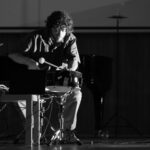
No Human Needed is a performative project based on the interaction between human and machine, in an attempt to investigate our relationship with technology in the contemporary world. Through the use of 3D printing, the artist creates it’s robots, which interact thanks to a modular Eurorack system and different percussions. The robots generate spatialized rhythms in a purely random way, projecting the listener into an unprecedented sound dimension. In a second phase, the artist takes control of the rhythms generated, in order to actively interact.
Christian Campobasso, composer, researcher and drummer, blends improvisation with patterns captured from everyday objects. The artist has created differents percussive robotic systems with 3D printing techniques. He integrates polyrhythms, soundscape music and modular systems. He studied a BA in electronic music composition in the Conservatory G. Verdi of Milan and a BA in jazz drums at University of the West of the Scotland.
-
- DISTANTE/FALZEA
-

- © Roberto Trillo
-
- © Christian Campobasso
-
- © Marek Polisk


